
Finding a therapist can feel overwhelming, especially when you are already dealing with something hard. There are directories, insurance constraints, and long waitlists, and it is not always clear where to start or who is a good fit for you.
We built Mental Health Match to make that first step easier. It is a free tool that asks you a few questions about what you are looking for, then shows you licensed therapists who match your needs. This guide explains what the tool does, how it works, and how it fits alongside other ways of finding care.
What Is Mental Health Match?
Mental Health Match is a free, confidential tool that connects you with licensed therapists who fit your needs. Every therapist you see through the tool is fully licensed and in good standing with their state board. You do not need to create an account to use it. Mental Health Match has helped nearly 1 million people find a therapist.
We created it because we know the search for care can feel overwhelming, and we wanted a clearer way in. Instead of guessing, you tell us a little about yourself, and we do the sorting.
How Does Mental Health Match Work?
The tool works by asking you a few questions about yourself and what you are hoping for, both in therapy and in the therapist you are looking for. That includes things such as what you want to work on, your budget and insurance, and preferences such as gender, language, or cultural background. After the short survey, you get a list of therapists who best match what you shared.
From there, you can view detailed profiles that let you learn about each therapist’s personality and approach in sessions. You can read how they describe their work, see what they specialize in, and get a feel for whether they might be a good fit before you ever send a message. When someone stands out, you reach out to them directly.
Here’s a quick recap:
- Answer a few questions about your concerns, goals, and practical needs such as budget and insurance.
- Get matched with licensed therapists who fit what you shared.
- Read detailed profiles to learn about each therapist’s approach and personality.
- Reach out to the therapist who feels like the best fit for you.
Curious what kind of therapist would be right for you?
We’ve helped over 500,000 find a therapist that fits for free.

Why Does Finding the Right Therapist Matter?
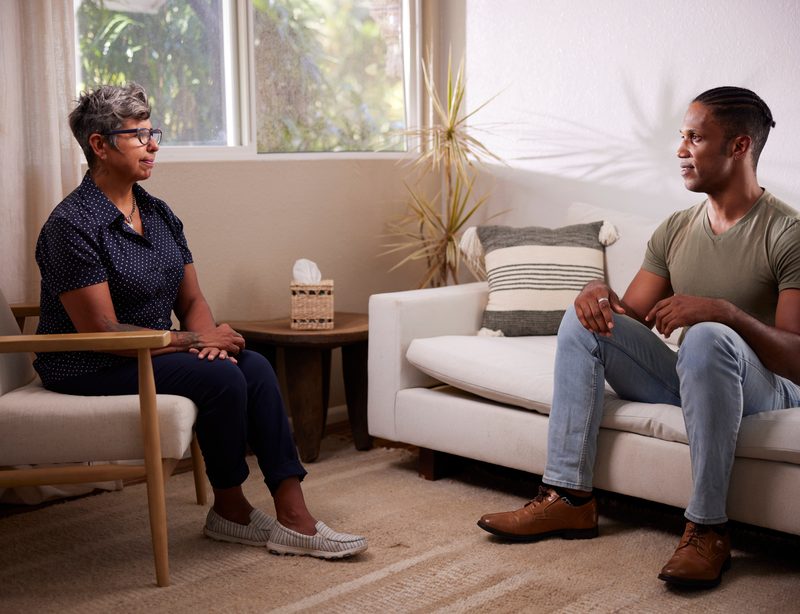
The connection you build with your therapist is not a small detail. Research shows the bond you build with your therapist is one of the strongest factors in whether therapy helps. When you feel safe and understood, you are more likely to open up, stay with the process, and make progress.
That is why we focus on fit from the start, rather than simply showing you whoever is closest or cheapest first. A good match can be the difference between dreading a session and looking forward to it.
Does It Matter If My Therapist Shares My Background?
For many people, it does. Some people feel more comfortable, and more positively, toward a therapist who shares parts of their background, such as race, ethnicity, language, or faith. At the same time, shared identity on its own does not guarantee that therapy will work better, and how much it matters varies from person to person.
So this is a preference to consider, not a rule. With Mental Health Match, we help you understand what matters to you by asking a few questions, showing therapists who fit, and then you decide for yourself once you have read their profiles.
How Is Mental Health Match Different From Other Ways to Find a Therapist?
There are many ways to find a therapist, and our tool is one option among several. You might also ask your primary care doctor for a referral, call the number on your insurance card for in-network providers, or check community mental health centers, which often offer lower-cost care. Each of these can work.
What free tools such as Mental Health Match add is a way to take a lot of the guesswork out of the process. Instead of scrolling through long lists, you answer a few questions and see therapists matched to your needs, with profiles that help you choose. We created Mental Health Match to make this part easier, and it is free to use. You can start our matching tool whenever you feel ready.
| Disclaimer: This article is for informational purposes only and is not a substitute for professional medical advice, diagnosis, or treatment. Always talk to a qualified healthcare professional about any medical concerns. If you are in crisis, please call or text the 988 Suicide & Crisis Lifeline at 988. |