

Walking into a first couples therapy appointment can feel strange. You are about to describe your relationship to someone you just met, with your partner sitting right there, and you’re doing this in front of a relative stranger.
The good news is that couples therapy is more structured than people expect, to your benefit. We put this guide together so you know what to anticipate, from the first phone call through the first few months.
What Is Couples Therapy?
Couples therapy is talk therapy where both partners meet with the same clinician at the same time, and the relationship is the focus. It is a widely used approach for reducing relationship distress, and it is open to any committed partnership, married or not.
Many couples therapists are licensed marriage and family therapists, trained to look at problems through the lens of relationships and patterns rather than one person’s symptoms. Psychologists, clinical social workers, and licensed counselors also work with couples.
What Happens in the First Couples Therapy Session?
The first session is usually an intake. Your therapist covers practical details first, including scheduling and how privacy works, then starts asking questions.
A first session usually covers some version of the following ground.
- How you met and what the early years were like
- What brought you in now, and why now rather than a year ago
- What each of you would want to be different in six months
- How conflict usually unfolds between you
- Whether either of you is dealing with depression, anxiety, grief, or substance use
- Whether you have tried therapy before, together or separately
You will each get a turn. A good therapist will interrupt if one person is dominating; this is to help guide the sessions. If first sessions make you nervous in general, our guide to the first therapy session covers the basics.
Curious what kind of therapist would be right for you?
We’ve helped over 500,000 find a therapist that fits for free.
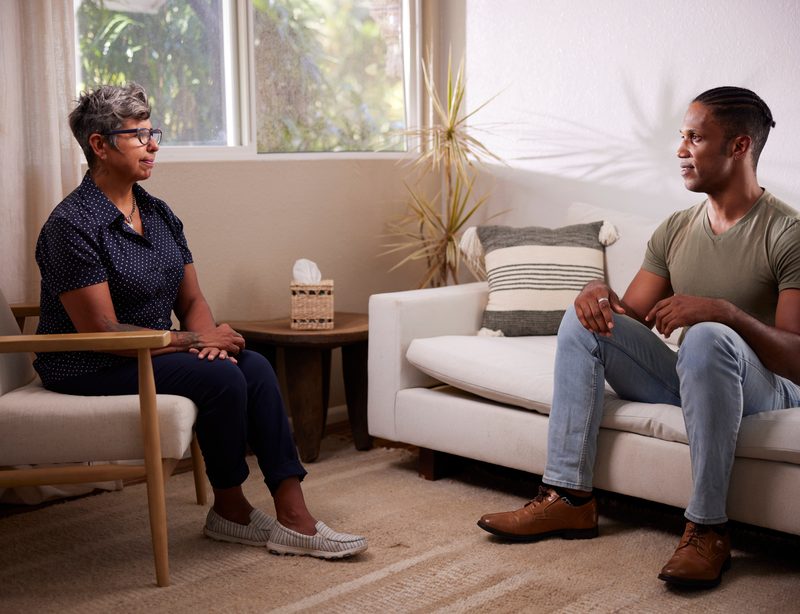

Will We Meet With the Therapist Separately?
Often, yes. Many couples therapists schedule an individual session with each partner during the assessment phase, then bring you back together to share what they are seeing and propose a plan. That summary meeting is sometimes called a feedback session.
Individual sessions give each of you room to say things that are harder to say in front of your partner. Ask at the start how your therapist handles information shared there, because policies differ. Some will not keep secrets from the other partner, and others hold certain things in confidence.
What Does a Typical Couples Therapy Session Look Like?
Sessions usually run 50 to 90 minutes and follow a loose rhythm. You check in on the week, look at a specific recent moment that went badly or unexpectedly well, and slow it down to understand what happened underneath.
The specifics depend on your therapist’s approach. In emotionally focused therapy, much of the work involves naming the softer feelings sitting under the anger. In more behavioral approaches, you may spend time practicing a conversation out loud while the therapist coaches you. Either way, couples in therapy tend to see shifts in communication, emotional closeness, and everyday behavior toward each other.
You may not know what to bring in each week, and that is normal. Our guide to what to talk about in therapy applies here. Keep in mind that specific moments are usually more useful than general complaints.
Will We Have Homework Between Sessions?
Usually. Assignments tend to be small and concrete. You might be asked to schedule protected time together, try a specific way of raising a complaint, track when a pattern shows up, or read something short.
Skipping the practice or not applying what you’ve learned in session is one of the more common reasons couples therapy stalls out. When nothing is tried at home, sessions can turn into a weekly place to vent, which feels productive without changing much.
How Long Does Couples Therapy Take?
Most evidence-based approaches are designed to run over several months rather than a few weeks. Sessions are often weekly early on to build momentum, then might move to every other week as progress is made and you need less scaffolding.
The evidence for lasting change is encouraging. In one large clinical trial, gains in relationship satisfaction held for at least five years after treatment ended for the average couple. Our guide to how long therapy takes to work has more on pacing and what early progress tends to look like.
Is Couples Therapy Confidential?
Therapists follow applicable privacy laws, which generally means what you say stays between you, your partner, and your therapist. There are standard limits, such as a risk of serious harm or a court order, and it is reasonable to ask directly how confidentiality works and where the limits are in your first meeting.
Couples work has an additional privacy consideration, , which is how the therapist handles information you share from individual sessions. Ask about your therapist’s process for addressing these kinds of disclosures if they don’t share this at the outset. Our guide to therapist confidentiality covers the general rules, and our list of questions to ask a therapist can help you start that conversation.
What If One of Us Is More Reluctant?
This is extremely common and doesn’t mean it still isn’t worth trying or won’t be helpful. What tends to matter is whether the reluctant partner is willing to participate in good faith once there, since therapy rarely gets far when someone has been pressured into the room or has already decided the relationship is over.
If talking about therapy at all feels loaded, our piece on being more open about therapy offers some ways into that conversation.
One important exception: if there is violence, coercion, or fear in the relationship, joint sessions can make things less safe. Intimate partner violence includes physical and sexual violence, stalking, and psychological aggression, and individual support is generally the safer first step. The National Domestic Violence Hotline is available around the clock at 1-800-799-7233, or by texting START to 88788.
How Do We Find a Couples Therapist?
You can ask your primary care provider for a referral, search your health plan’s directory, contact a community counseling center, or use a free matching tool. Video sessions are widely available for couples too, and our guide to remote versus in-person therapy covers the trade-offs.
Finding a Couples Therapist Through Mental Health Match
We built Mental Health Match to make this part less exhausting, and it is free to use. You answer a few questions about what you are looking for, including your concerns, your insurance, and practical needs such as evening availability, and we introduce you to therapists who fit, with detailed profiles so you can get a sense of someone before you reach out. It is one option alongside referrals, directories, and community resources.
Both partners should have a say in the choice. Our guide to what to look for in a therapist walks through what to notice in that first conversation.
| Disclaimer: This article is for informational purposes only and is not a substitute for professional medical advice, diagnosis, or treatment. Always talk to a qualified healthcare professional about any medical concerns. If you are in crisis, please call or text the 988 Suicide & Crisis Lifeline at 988. |