

If you have searched for help with your relationship, you’ll likely have run into a few different terms. It’s understandable to wonder if they all describe different services. Two of the common ones are couples therapy and marriage counseling.
There’s no license, board, or billing code that distinguishes couples therapy from marriage counseling. Most clinicians use the terms interchangeably, and those that do distinguish do not all do so in the same way.
We put this guide together to explain where the terms came from, what actually varies between providers, and how to choose someone who fits what your relationship needs.
What Is Couples Therapy?
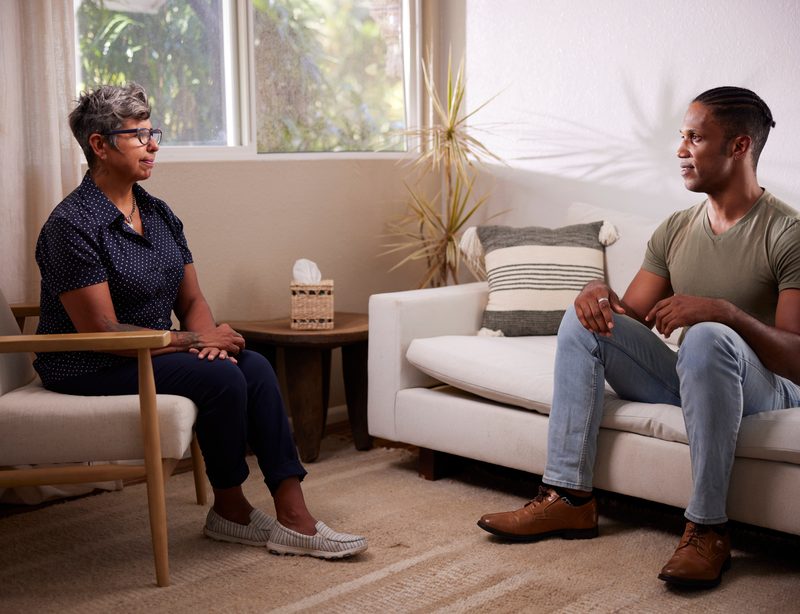
Couples therapy is a form of talk therapy in which both partners attend together and the relationship is the focus. Sessions tend to look at patterns rather than single incidents. For example, a therapist may look at how your disagreements escalate, how you react when things get tense, and , help name unspoken expectations and resentments.
The term is broad. It covers married and unmarried partners, long-term and new relationships, and couples of any gender or relationship structure. It can also help you work through one specific issue, such as an affair, a health diagnosis, or a decision about children.
What Is Marriage Counseling?
Marriage counseling is an older term. Early marriage counseling in the United States was mostly a practical mix of psychoeducation and advice, and it came before the modern models of couple therapy.
Clinicians use the term in different ways today. Some mean shorter, present-focused work on one specific problem. Some use it because their clients search for it. Faith-based counseling programs often use it as well, and those programs vary widely in training and approach.
Curious what kind of therapist would be right for you?
We’ve helped over 500,000 find a therapist that fits for free.

Is There Actually a Difference Between Couples Therapy and Marriage Counseling?
The terms don’t have any meaningful difference these days. Two therapists who use the same term may work very differently, and two who use different terms may do nearly identical work.
Therapy names are also not regulated the way medications are. There is no formal approval process for psychotherapies. Nothing stops one practice from calling its service counseling and another from calling the same service therapy.
Any meaningful differences will be revealed through conversations with specific therapists or clinics. Ask how long the therapist expects the work to take, whether they use a specific model, whether they will meet with each of you separately, and whether they have worked with couples in your situation.
Who Provides Couples Therapy?
Several licenses qualify someone to work with couples. All of them require a graduate degree and a state-specified number of supervised clinical hours before they can practice independently. We cover the full range of therapist credentials.
- LMFT (Licensed Marriage and Family Therapist). LMFTs are trained to view individual struggles through the lens of relationships and family systems. They look at how patterns within a couple or family contribute to what someone is experiencing.
- LCSW (Licensed Clinical Social Worker). LCSWs receive psychotherapy training grounded in a person-in-environment perspective, which considers how relationships, community, and life circumstances shape mental health.
- LPC or LPCC (Licensed Professional Counselor). LPCs complete master’s-level counseling training with a practical, skills-based approach to managing symptoms and handling life challenges.
- PhD or PsyD (Psychologist). Psychologists complete doctoral-level training that includes psychotherapy and psychological assessment. Their training is shaped by research, often with deeper specialization in particular areas.
Does Couples Therapy Work?
For most couples, yes. A pooled analysis of 58 studies covering more than 2,000 couples found that couples therapy has a large effect on relationship satisfaction, and that couples assigned to a waiting list do not meaningfully improve while they wait. Clinicians often describe an improvement rate in the range of 70 to 80 percent.
Satisfaction is not the only thing that shifts. Couples in therapy also tend to see changes in how they communicate, how close they feel, and how they treat each other day to day. Those are often what partners notice first.
When Is Couples Therapy Not the Right Starting Point?
About 41% of women and 26% of men in the United States experience contact sexual violence, physical violence, or stalking by a partner during their lifetimes. If partner violence is present, couples therapy isn’t the answer.
If you are afraid of your partner, joint sessions can put you at risk, because anything you say in the room goes home with both of you. Many therapists screen for this and meet with each partner alone before they decide how to proceed. Individual support is usually the safer first step.
The National Domestic Violence Hotline is available 24 hours a day at 1-800-799-7233, by text at START to 88788, and by chat at thehotline.org. Call 911 if you are in immediate danger.
How Do We Find the Right Couples Therapist?
Start with understanding what you want to work on, then look for a therapist who describes helping couples like you in their profile. Your insurance directory, a referral from your primary care provider, and an employee assistance program are all places to start. Community clinics often charge lower fees.
Fit matters as much as method, and both of you need to feel connected The relationship between clients and their therapist is one of the strongest predictors of how well therapy works. If one partner never feels comfortable with the therapist, it’s important to name this instead of pushing through. Our guide on whether a therapist is right for you covers what to weigh.
Free tools such as Mental Health Match can also help make this searching easier. We built it with therapists, so you answer a few questions about what you are looking for, and we return the five therapists best suited to help. The match weighs approach, culture, insurance, budget, and scheduling together. Therapists on the platform work with individuals, couples, and families, and every license and credential is verified before a therapist joins. The tool is free and confidential.
| Disclaimer: This article is for informational purposes only and is not a substitute for professional medical advice, diagnosis, or treatment. Always talk to a qualified healthcare professional about any medical concerns. If you are in crisis, please call or text the 988 Suicide & Crisis Lifeline at 988. |